Pregnancy and Psoriasis
Planning for a family is a very exciting time but for many people with psoriasis, this can mean worrying about which treatments they will be able to use and what effect changing treatments may have on their skin.
Many women find that their psoriasis changes during pregnancy, possibly due to hormonal
fluctuations and the increased amount of oestrogen in their body. Most of those who notice
changes see an improvement in their psoriasis; however, some may find that their psoriasis
remains or worsens during pregnancy. Psoriasis may also come back after giving birth, but for
many people this simply means it returns to how it was before the pregnancy.
Can psoriasis and/or PsA affect pregnancy?
Psoriasis may be associated with some factors that can affect fertility and pregnancy:
- Emotional well-being: The stress, social stigma, and impact on self-esteem that often
come with psoriasis can affect a person’s overall health and well-being, which may
indirectly influence fertility.
- Medical Treatments: Some systemic medications used to treat psoriasis may not be safe
during pregnancy. Because of this, it is very important for patients to talk with their
healthcare team about birth control and planning for a family.
- Health and Lifestyle Factors: People with psoriasis are more likely to have other health
conditions such as depression or adopt habits like smoking. These factors are already
known to make getting pregnant more difficult and so can potentially increase the risk of
complications, such as miscarriage.
A large UK study has found that women with psoriasis had a slightly higher chance of pregnancy
loss than women without psoriasis. The difference was small, and the study cannot show that
psoriasis itself causes pregnancy loss. If you have psoriasis and are planning a pregnancy or are
pregnant, it is sensible to discuss your psoriasis and its treatment with your healthcare team.
Possible treatments for use during pregnancy
Many topical treatments can be used during pregnancy and for many people, they will be able to
continue their usual skincare routine while pregnant.
Topical treatments that may be suitable include emollients, some topical steroids, and ciclosporin (after consulting a dermatologist or healthcare professional. More information on possible treatments to use, as well as those to avoid, can be found in our full pregnancy information sheet.
Find out more
We have produced an information offering advice to people thinking about starting a family, covering some of the things you may need to think about.
Download the information sheet
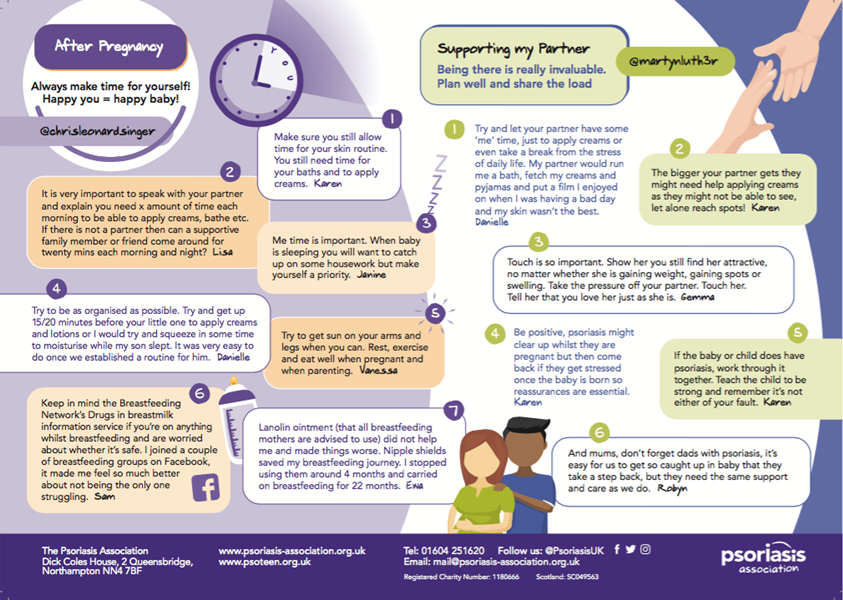
Our colourful infographic, which features tips for before, during and after pregnancy has been compiled by those who have already experienced treating psoriasis during pregnancy.
Download the infographic
If you have any concerns about taking medication for Psoriasis whilst pregnant, it's always best to speak to a Dermatologist.
Reviewed in November 2026. Next review due: November 2029.