Eleanor's Story
This Psoriasis Awareness Week, we hear from 35-year-old Eleanor about living with psoriatic arthritis. From fatigue and painful joints to losing confidence in her body, Eleanor shares the reality of an invisible condition and learning to be kinder to herself.
For months, I have wanted to write about my experience with Psoriatic Arthritis, but my body wouldn’t let me. I couldn’t organise my thoughts through the deep fatigue that had rendered my brain a slow, foggy place I didn’t recognise. My hands were too sore, stiff and swollen to put my thoughts into words on the page. And therein lies the painful reality of living with this disease.
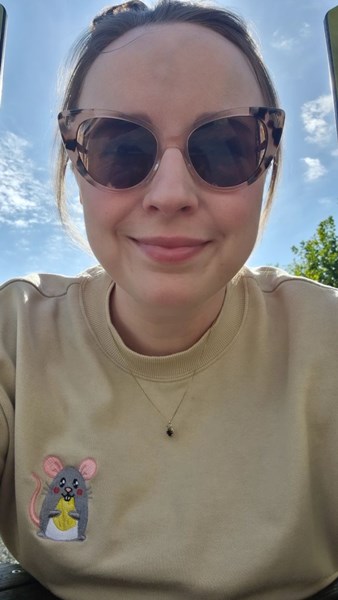 Click to enlarge
It was a Tuesday morning, the day my body finally said no. I was due to do all the normal things: get the kids ready and off to nursery and school, get myself ready and off to work. But I couldn’t do it. I couldn’t get up. I couldn’t move. I couldn’t think.
In reality, it had started months, possibly even years earlier, but it crept in so insidiously, invaded my life so stealthily, that I hadn’t even realised how much I had been adapting. How much my life had been revolving around trying to ignore symptoms and keep going.
I could explain everything away. Back pain - oh, I probably slept funny; I’ve been lifting the kids a lot; breastfeeding in awkward positions. Tiredness - oh, work is busy and stressful; the kids are waking up at night; I’m never getting a full night’s sleep.
But then came symptoms I couldn’t quite explain away. Morning joint stiffness that made it hard to even turn over in bed. Swelling in my hands. Difficulty squeezing the shampoo bottle. Not being able to do up buttons, bra straps or the zips on the children’s coats in the morning. Overwhelming exhaustion. Sleeping whenever I had the opportunity. I had stopped going to the gym because I couldn’t muster the energy anymore. I stopped making plans for the weekend because I knew I would need to use it to recover from the week.
My life had closed in around me without me fully realising it, as I tried to preserve what little I had left in order to survive.
I was scared to go to the doctor. Scared because I'd spent so long convincing myself that nothing was wrong, that maybe nothing actually was. Perhaps I was going mad. But even more so, scared because I knew there was something wrong.
The irony is that I'm a doctor myself. I knew the language. I knew what the symptoms could mean. And yet, when it came to my own body, I had managed to convince myself that perhaps I was imagining it all.
The GP organised blood tests and scans, and referred me urgently to a Rheumatologist. The Rheumatologist diagnosed me immediately, right there and then, in his clinic room. He listened to my story, examined my body, and scanned my joints with his ultrasound machine.
So many words. Psoriatic arthritis, spondylitis, enthesitis, bursitis, sacroiliitis, synovitis, dactylitis, fasciitis. All words to explain the different parts of my body that were screaming with inflammation.
I had an answer. It was validating, as it explained everything, but it was also crushing, as it was the fear I hadn't dared to vocalise.
I had gone from being a fit, healthy, young, working mother and wife, a doctor, whose job it is to look after everyone else, to someone I didn’t recognise, someone needing daily medication, injections, fortnightly blood tests and, at times, help just to get to the loo.
Finding the right medication has been a journey, and I haven't got to the final destination yet, but I am hopeful there is a treatment out there that will work for me. The side effects of immunosuppressant and steroid therapy have been cruel. Swelling, puffiness and weight gain that has made me feel unfamiliar in my own body, hair loss that affects my confidence, mouth ulcers, nose bleeds, tummy upset that makes me scared to leave the house, muscle aches, brain fog.
It is difficult to explain what it feels like to lose confidence in a body that you once trusted completely. I went through a period of feeling unsafe to even leave the house as I couldn’t be sure I could trust my body to do what I needed it to do.
One of the hardest parts of living with a chronic illness like Psoriatic Arthritis is the invisibility of it. It is difficult for people to understand how unwell you feel when there isn't always obvious external evidence of it. It hides itself well. You can look okay on the outside while feeling like your body is failing you. People can see you on a "good day" and assume you're fine, but what they don't see is the recovery time needed afterwards, the flare ups of joint pain and swelling, the soul crushing fatigue, or the constant mental calculation behind every decision that requires expenditure of energy.
It doesn't just affect your body; it brings with it so many emotions and changes your relationship with yourself and with others. It affects your sense of identity as it interferes with everything that makes you, you. It reaches into every close relationship in your life and brings with it feelings of guilt. Guilt for not being the version of yourself you always thought you'd be.
I don't really have a neat way of bringing this to a close because, in reality, it hasn't come to a close. It is all still very fresh and raw, and I can't say I have fully come to accept it. I don't know if acceptance will come, but in the meantime, I am learning to live with the uncertainty; to listen to my body and be kinder to myself when it doesn't do what I want it to; to try not to feel guilty when I need to rest, and not to feel weak when I need to ask for help. Some days I manage this better than others. But I will keep trying. For now, I think that has to be enough.
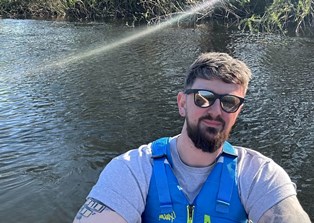
Rob
Rob was diagnosed with psoriasis when he was 21 and then psoriatic arthritis when he was 27. He bravely opens up about his struggles in his story.
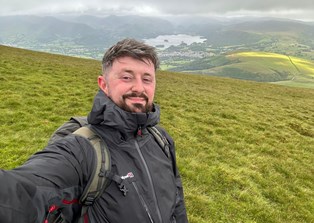
Rob
This Psoriasis Awareness Week, we spoke to Rob who previously shared his story with us. This time, he talks about his perseverance to find the right treatment for him.
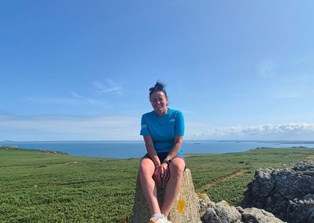
Janine
This Psoriasis Awareness Week, Janine reflects on living with psoriasis since her twenties and how her priorities have changed with age. Now in her fifties, she’s embracing healthy ageing, staying active and making the most of the years ahead.
Ryan
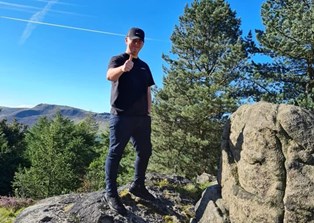
After a sudden onset of severe pain changed the course of Ryan’s life and led to a diagnosis of psoriatic arthritis, he spent years struggling. Now, he is determined to rebuild his life and show that an invisible illness doesn’t mean an invisible life.
Siobhan
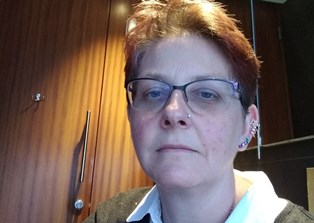
Siobhan has been swimming 30 miles to raise money for the Psoriasis Association. In her story, she shares the struggles that she's had with her health over the years.